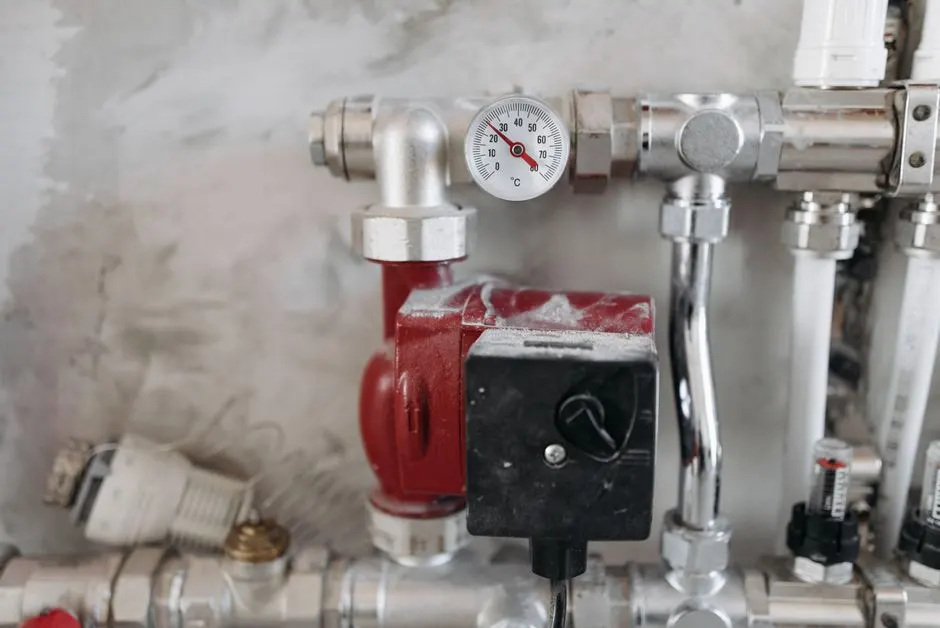
Recirculation Pump and Controls
A pump sized to your tankless unit's minimum activation flow, plus the timer or aquastat that runs it on your schedule. We stock the common models so we are not waiting on a supply run.
Every install is quoted as a complete job, not a parts list. Here is what is covered in a standard residential recirculation pump installation, and what we quote separately if your system needs it.
A pump sized to your tankless unit's minimum activation flow, plus the timer or aquastat that runs it on your schedule. We stock the common models so we are not waiting on a supply run.
Installed at the farthest fixture under the sink. This is what lets the loop work without a dedicated return line in most Dallas homes, and it is the part that makes the biggest difference in wait time.
Where a dedicated return line makes sense, we run PEX tubing or copper pipe back to the heater, secure it, and pressure test every joint before closing up.
We check incoming pressure with a pressure gauge, verify flow with a water flow meter, and confirm temperature at every tap with a thermal camera before we call the job done.
Rinnai, Navien and Noritz units need specific dip switch and parameter settings for recirculation. We set them to manufacturer spec so the unit does not short-cycle or throw error codes.
We show you how to change the schedule, how to shut the pump off, and how to read the status light. You get warranty paperwork for the pump and our labor before we leave.
Tankless water heater recirculation pump installation Dallas TX is a plumbing upgrade that adds a small pump, a return line or thermal bypass valve, and controls to your existing tankless system so hot water circulates to the farthest fixture before you open the tap. On a standard tankless setup, the unit only fires when water flows, so the cold slug sitting in the pipe has to be pushed out first. A recirculation pump solves that by keeping warm water moving through the loop on a schedule you set.
Dallas homes feel this problem more than most. Slab-on-grade construction in Lakewood and East Dallas means long horizontal runs under concrete, and two-story houses in North Dallas can push 60 to 80 feet from the heater to the master bath. Add our 100-plus-degree summer ground temperatures and hard water that leaves scale on the heat exchanger, and the wait gets longer every year. A tankless water heater recirculation pump setup Dallas homeowners actually notice is one that is sized to the loop, not just bolted on.
We handle the whole job in one visit for most Dallas homes. Here is the sequence, start to finish.
Schedule
Call or book online — a real human picks up and confirms a 2-hour arrival window.
Diagnose
Licensed tech inspects on-site, then walks you through the cause and your options.
Fix
The job is completed to code and done right the first time — no shortcuts, no surprises.
Guarantee
Every job backed by a written workmanship warranty — and we stand behind it.
Thermal camera
Traces the hot-water run and confirms temperature at every fixture during commissioning. Shows us exactly where the cold slug is sitting.
Water flow meter
Verifies the pump is moving enough water to activate the tankless unit, usually 0.4 to 0.8 GPM depending on the brand.
Manifold pressure gauge
Checks gas supply pressure on gas tankless units before and after the recirculation pump install.
Pressure gauge
Confirms incoming water pressure is in range. High pressure can damage the pump and the heat exchanger.
Descaling pump and flush kit
Flushes scale out of the heat exchanger before we add a recirculation pump, so nothing gets pushed through the new loop.
Pipe wrench and tube brush
Standard tools for cutting in the pump, cleaning fittings, and prepping copper pipe or PEX tubing connections.
Multimeter
Tests wiring on the pump controls and confirms the tankless unit's electrical connections are correct.
Uniform Plumbing Code (UPC) loop design
We size the loop, the pump and the bypass valve to UPC requirements so the install is code-correct and passes inspection. That matters for warranty claims and for resale.
Manufacturer-specific dip switch setup
Rinnai, Navien and Noritz units each have their own recirculation parameters. We set them to the manufacturer's spec so the unit does not short-cycle or throw error codes.
Thermal bypass valve placement
The bypass valve goes at the farthest fixture, not the closest. That is what makes the loop work without a dedicated return line in most Dallas homes.
Scheduled and on-demand pump control
We set the pump to run on your schedule or on demand, not 24/7. That keeps energy use predictable and extends pump life.
01
What we do: We install a pump on the cold inlet and a thermal bypass valve under the master bath sink. The loop runs on a morning and evening schedule set to the family's routine.
→ Hot water in about 10 seconds at the master bath, down from 75. The family stops running cold water down the drain every morning.
02
What we do: A dedicated return line is not practical under slab, so we use a crossover valve at the kitchen sink and set the pump to run on demand with a push button.
→ Kitchen hot water in under 15 seconds. No slab cutting, no return line, and the pump only runs when someone presses the button.
03
What we do: We flush the heat exchanger with a descaling pump, replace the isolation valves, and install a recirculation pump set to Navien's recirculation parameters.
→ The ignition codes stop, the unit runs quieter, and the homeowner gets hot water faster at every tap.
04
What we do: We design a multi-loop recirculation system with a commercial pump, balanced flow across all four fixtures, and a timer set to the kitchen's operating hours.
→ Staff stop waiting at the hand sinks during service, and the kitchen passes its health inspection with hot water at every station.
Dallas has a specific set of conditions that shape how we install a recirculation pump. Slab-on-grade construction in Lakewood, East Dallas and Oak Lawn means long horizontal runs under concrete, so a dedicated return line is often impractical and a thermal bypass valve at the farthest fixture is the right answer. Two-story homes in North Dallas and University Park push 60 to 80 feet from the heater to the master bath, which is where the wait time hurts most. Our hard water leaves scale on the heat exchanger, so we flush with a descaling pump and flush kit before adding a pump. Summer ground temperatures above 100 degrees and winter freeze events both stress the system, and we set the controls with both in mind. We follow UPC and IPC on every loop, pull permits when required, and work with Rinnai, Navien, Noritz, Rheem and Bosch units daily.
Lakewood
Slab-on-grade bungalows with long horizontal runs. We almost always use a thermal bypass valve here instead of a dedicated return line.
Uptown Dallas
High-rise condos and townhomes with shared walls. We coordinate with building management on shutoff windows and pump placement.
University Park
Larger two-story homes with 70-80 foot runs. Dedicated return lines often make sense here, and we run PEX tubing through the attic.
North Dallas
1980s and 1990s builds with tankless retrofits. We check the gas supply with a manifold pressure gauge before adding a pump.
Deep Ellum
Mixed-use buildings and small commercial kitchens. Multi-loop recirculation systems with balanced flow across fixtures.
Hard water that scales the heat exchanger
Scale buildup slows heat transfer and shortens the unit's life. We flush with a descaling pump before installing the recirculation pump so scale does not get pushed through the new loop.
Slab-on-grade construction with long horizontal runs
A dedicated return line under slab is not practical. We use a thermal bypass valve at the farthest fixture instead, which works just as well for most homes.
Winter freeze events that crack heat exchangers
A recirculation pump with freeze protection keeps water moving during cold snaps. We also check the isolation valves and pressure relief valve on the same visit.
Summer ground temperatures above 100 degrees
Hot incoming water changes the pump's duty cycle. We set the timer and aquastat to account for Dallas summers so the pump does not run longer than it needs to.
These are the calls we get most often from Dallas homeowners. A recirculation pump fixes most of them, and we will tell you honestly when it will not.
Problem
You waste 8,000 to 12,000 gallons a year and start every morning frustrated. In a two-story North Dallas home, the wait gets worse as the run ages.
Our Fix
We install a recirculation pump with a thermal bypass valve at the farthest fixture. Most Dallas homes see the wait drop to 5-15 seconds. We size the pump to your tankless unit so it does not short-cycle.
Problem
Short, frequent draws cause more ignition cycles and more scale on the heat exchanger. Left alone, this shortens the unit's life and can lead to heat exchanger failure.
Our Fix
We diagnose the error code, flush the heat exchanger with a descaling pump and flush kit, then install a recirculation pump to smooth the demand pattern. That combination usually stops the codes from coming back.
Problem
You run the tap, wait, and dump cold water down the drain. On a Dallas Water Utilities tier that jumps after 10,000 gallons, that waste shows up on the bill.
Our Fix
A recirculation pump on a morning schedule keeps warm water at the kitchen tap. We set the timer to your routine so the pump is not running while you are at work or asleep.
Problem
A hard freeze can crack a heat exchanger or split a line overnight. Repair costs run into the thousands, and you are without hot water until parts arrive.
Our Fix
A recirculation pump with freeze protection keeps water moving through the loop during cold snaps. We also check the isolation valves and pressure relief valve while we are on site.

A recirculation pump is the difference between a tankless system that feels modern and one that feels broken. Here is what changes the day we finish the install.
Hot Water in 5-15 Seconds
Most Dallas homes wait 45 to 90 seconds for hot water at the far bathroom. With a properly sized pump and a thermal bypass valve under the sink, that drops to 5-15 seconds. You stop running cold water down the drain while you wait, which saves 8,000 to 12,000 gallons a year in a typical four-person household.
Lower Water Waste
Every cold purge sends treated water straight to the sewer. A recirculation loop cuts that waste by 90 percent or more on the hot side. If you are on a Dallas Water Utilities tier that jumps after 10,000 gallons, the pump pays part of its own bill back over time.
Protects the Heat Exchanger
Short, frequent draws on a tankless unit cause more scale and more ignition cycles than long draws. A recirculation pump smooths out the demand pattern, which reduces scale buildup on the heat exchanger and cuts down on error codes like flame failure and ignition lockout.
Works With Your Schedule
We set the pump timer to run during your morning and evening windows, not 24/7. That keeps gas or electric use predictable and keeps the pump from running while you are at work. You can override it any time with a button or app, depending on the model.
Google ★★★★★4.9
Installed a recirculation pump on our Rinnai and set the dip switches correctly. The last company we called did not know the unit needed that. Hot water in 10 seconds now. Clean work, fair price.
Yelp ★★★★★4.8
They flushed our heat exchanger and added a recirculation pump in one visit. The ignition codes stopped and the water is hot faster. Showed me the scale that came out of the unit.
BBB ★★★★★4.9
Property manager here. They installed recirculation pumps on three rental units and documented everything for warranty. Tenants stopped complaining about cold water. Will use again.
Google ★★★★★5.0
Called about a cold-water wait at the master bath. They diagnosed the long run, recommended a bypass valve instead of a return line, and saved us money. Honest assessment.
Our plumbers hold a Texas State Board of Plumbing Examiners (TSBPE) license and carry NATE certification on tankless systems. We work on Rinnai, Navien, Noritz, Takagi, Bosch, Rheem, A.O. Smith, Bradford White, Stiebel Eltron and Eemax units every week, and we keep manufacturer-specific training current on the Rinnai and Navien lines. That matters because recirculation pump wiring and dip-switch settings are brand-specific, and a generic install can void your tankless warranty. We follow Uniform Plumbing Code (UPC) and International Plumbing Code (IPC) on every loop we build, and we pull permits when the job requires it.
Real answers to the questions we hear most often from local homeowners and property managers.
New tankless installs pair naturally with a recirculation pump. We size the unit for your Dallas home and set the loop up on day one so you never wait for hot water.
View Tankless Water Heater InstallationIf your tankless unit is throwing error codes or losing pressure, we fix the underlying issue before adding a recirculation pump so the new loop runs clean.
View Tankless Water Heater RepairAnnual maintenance keeps the heat exchanger clean and the recirculation pump running at spec. We check both on the same visit.
View Tankless Water Heater MaintenanceReplacing an aging tankless unit is the right time to add a recirculation loop. We handle both in one visit and set the controls together.
View Tankless Water Heater ReplacementA tune-up checks flow rate, gas pressure and ignition. If your recirculation pump is short-cycling, the tune-up usually finds the cause.
View Tankless Water Heater Tune-UpsDallas hard water leaves scale on the heat exchanger. We flush with a descaling pump and flush kit before installing a recirculation pump so nothing gets pushed through the loop.
View Tankless Water Heater Flushing & DescalingCall (214) 817-0188 any time, day or night, and we'll get a real person on the line. For non-emergency work, most Dallas jobs get a same-day or next-day appointment. You can also email [email protected] and we'll respond within one business day.
Phone
(214) 817-0188Address
14205 Proton Rd, Dallas, TX 75244
Hours
Mon–Fri: 7AM – 7PM
Sat: 8AM – 4PM
Sun: Emergency Only
24/7 Emergency Available